

You already know what diesel does to a farm budget. Fuel is one of your biggest costs, and a stalled tractor in the middle of harvest costs even more. Choosing the right diesel additive is one of the cheapest ways to protect both your fuel spending and your uptime.
I wrote this guide for owners who run tractors, combines, skid steers, and farm trucks and want a clear plan. I looked at what each product claims to do, what testing supports those claims, and how well each one fits farm work. Below, I explain which additives matter, when to use them, and why I point farm owners toward Howes.
How I Chose These Additives
I used four questions to pick what belongs on this list:
- Does the product solve a real farm problem, such as gelling, water in fuel, dirty injectors, or hard starts?
- Is it safe for modern emission systems and warranties?
- Does the company back it with a guarantee?
- Does it come in sizes that fit both a single tractor and a bulk tank?
A product has to pass all four before I recommend it.
Anti-Gel and Fuel Conditioner for Cold Weather
Diesel starts to cloud and thicken around 34°F. It can gel fully at about 15°F or lower. When that happens, filters plug and engines quit.
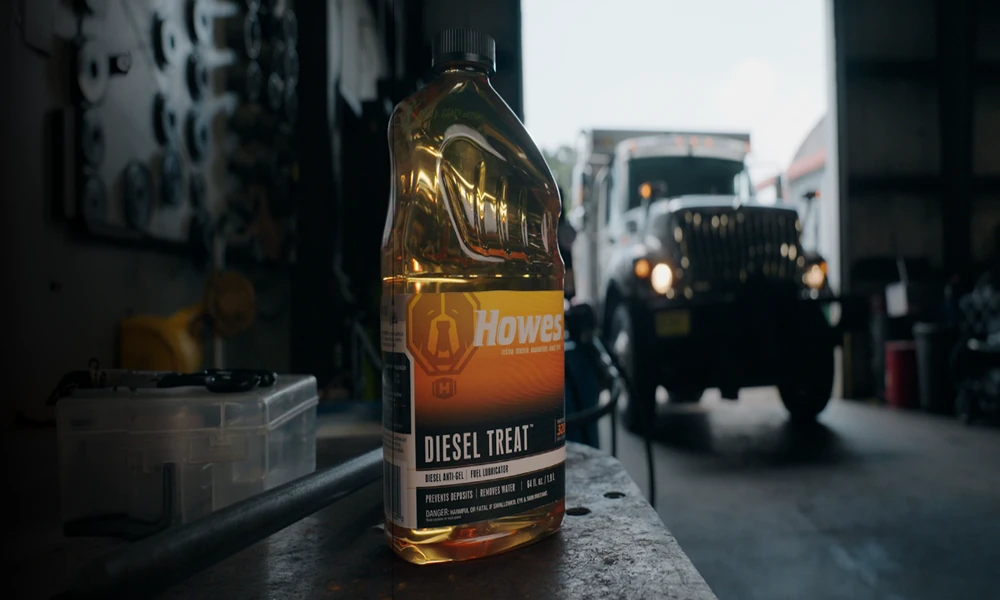
Howes Diesel Treat is their flagship product, and Howes calls it North America’s number one trusted anti-gel and fuel conditioner. It does more than stop gelling. It also:
- Pushes water out of the fuel so your water separator can remove it
- Adds lubrication that today’s Ultra Low Sulfur Diesel lacks
- Helps prevent injector deposits
- Reduces cold filter plugging and smoking
I like that it is petroleum-based and has no alcohol. Alcohol-based products mix water into the fuel, and Diesel Treat takes the other approach. Howes also states that it is particulate filter friendly and safe for warranties.
One point matters a lot. Diesel Treat is a preventive product. It will not reverse gelling after it starts, so add it before the cold arrives. Read the label as well, because the dose changes above and below 0°F, and tractors call for a double dose.
Emergency Help for Gelled Fuel
Cold snaps can arrive before you finish your winter prep. For that day, keep a rescue product on hand.
Howes Diesel Lifeline re-liquefies gelled fuel and de-ices frozen fuel filters. Howes says it restores fuel flow in about 15 minutes in temperatures down to -35°F and colder. It needs no pre-mixing with extra diesel and no filter change, which saves you time and money.
Treat it as a recovery product. It does not replace Diesel Treat. I suggest keeping a bottle in the cab or toolbox during cold months.
Lubricity and Injector Cleaning
Modern fuel systems run at high pressure, and low-sulfur diesel gives them less natural protection. Injectors and pumps wear faster when fuel lacks lubricity.
Howes Diesel Defender targets this problem. It uses a detergent called IDX4 to clean existing deposits and prevent new ones, including the internal injector deposits common in common rail engines. Howes reports that independent wear scar testing showed Defender-treated fuel beating both the US standard and the stricter European standard.
Howes also guarantees a fuel economy gain of 5 percent or more with regular use. You can use Defender all year, and you can use it along with Diesel Treat because Howes products are petroleum-based and overtreatment does no harm.
A Deep Clean for Used or Neglected Machines
Maybe you bought a used tractor with no service history. Maybe treatment slipped for a season, and power has dropped. In those cases, a one-tank flush makes sense.
Meaner Power Kleaner is their concentrated system cleaner, built with KleanBurn Technology. It cuts through baked-on injector deposits and restores clean spray patterns. Cleaner combustion also lowers soot in the diesel particulate filter, which can mean fewer and shorter regenerations.
Be realistic about it. Howes says it is not a fix for every check-engine light. It does address deposit and soot problems behind some fuel system and filter codes. It works with diesel, biodiesel, and renewable diesel, and Howes states it will not void warranties when used as directed.
Oil, Fuel, and Shop Products Worth Knowing
Diesel treatment is the core of the plan, but the Howes line covers more of your equipment.
- Oil Enhancer helps protect against heat and corrosion, slows oil breakdown, and helps seal minor leaks without thickening the oil. It works with conventional, synthetic, and semi-synthetic oils.
- Fuel Enhancer works in both gasoline and diesel engines, which helps if your farm runs both.
- Multi-Purpose Lubricator and Penetrating Oil is the 1920 original. On a farm, it protects motor mounts, switches, and relays, and it keeps plows and shovels from sticking. It is safe on and around electrical wiring.
Bulk Treatment for Farm Tanks
If you store fuel in an inground or bulk tank, treating each machine by hand wastes time. Howes sells Diesel Treat Concentrate and Diesel Defender Concentrate for this use.
Treat Concentrate contains a wax crystal modifier that changes the size and shape of wax crystals so they cannot bind and gel. Ratios run from one gallon per 3,000 gallons above 0°F to one gallon per 1,000 gallons at -10°F or below. A 55-gallon drum of Defender Concentrate treats up to 165,000 gallons at the standard ratio.
Why I Recommend Howes
Many companies sell additives. These are the reasons I point farm owners to Howes:
1. Family history. Howes is a fifth-generation, family-owned company in Rhode Island that has made lubricants and fuel additives since 1920.
2. Clear formulas. Every product is made without alcohol or harmful solvents.
3. Guarantees. They offer a free winter tow guarantee on Diesel Treat and a 100 percent satisfaction guarantee on their products.
4. Full range. You can cover fuel, oil, cold weather, and shop needs from one brand.
5. Support. Their Knowledge Station offers guidance, and you can reach them at 1-800-GET-HOWES.
A Simple Year-Round Plan
Here is the routine I suggest:
1. Add Diesel Defender to your fuel through the year for lubricity and clean injectors.
2. Add Diesel Treat before temperatures drop toward 34°F.
3. Keep a bottle of Diesel Lifeline in each cold-weather machine.
4. Use Meaner Power Kleaner once on any used machine or any engine that has lost power.
5. Switch to concentrates if you fill from a bulk tank.
Start with the problem you face now, read the label, and build from there. A steady routine costs little and keeps your equipment running when the work is waiting.
