


A robot cell often has a small opening where a tray or metal blank enters the guarded area. It is tempting to choose a light curtain from the opening width and leave the rest to the controls supplier. The width gives you a starting point for the span between the two heads. The harder questions are what else can fit through that opening and what the cell can throw back through it.
Draw the opening at the extremes
Put the smallest and largest production parts on the drawing, with the trays and any carrier handles. Show where they travel during normal feeding. Mark the space left around each load, including the space above a short part and alongside a narrow one. Look at the empty opening as well. A design that depends on the part itself filling a gap will see a different gap when the conveyor is empty.
Ask what happens during setup, when a part jams and when a carrier is removed. Can someone approach the hazard from the side or reach past the monitored plane? Could someone stand between that plane and the hazard? Bring these situations to the safeguarding design review before deciding how the opening will be monitored. Clear beams after a passage cannot establish that the area is empty.
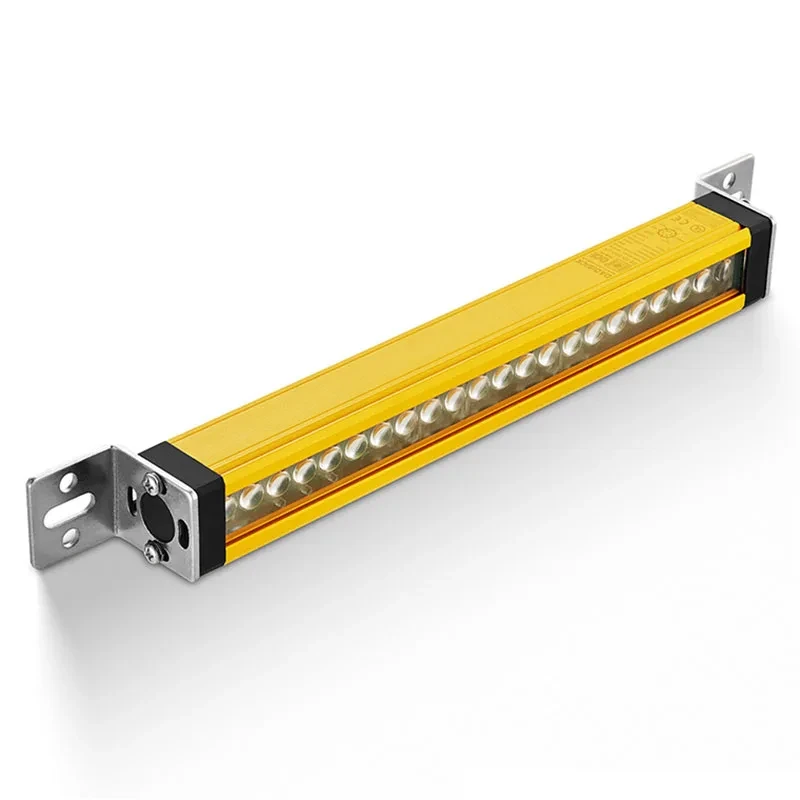
Example of a DQC through-beam light curtain housing.
Decide what needs a physical barrier
An optical field can detect a qualifying interruption. It cannot stop a piece of broken tooling or a part that escapes a gripper. A physical shield or tunnel may still be needed. Changing the path of the workpiece or narrowing the opening can also reduce the opportunities for access. These choices affect the opening before a sensor model is selected.
If the process requires material to pass through a protective field, describe that need explicitly. Any provision for material passage, such as muting where permitted by the design, needs a suitable, validated safety function. An ordinary process sensor that recognizes a tray does not by itself establish that a person cannot follow it.
Put the right information in the enquiry
Provide the opening drawing, material envelope and accessible routes to the hazard. Include the safety requirements from the machine assessment and the stopping information needed to establish separation. The guide to selecting a safety light curtain explains which questions affect detection capability and placement. Use the safety light curtain model comparison to shortlist documented devices once the required function is clear.
The photographs illustrate the separate heads used by one through-beam series. They do not establish whether a particular model is suitable for this cell. Review the exact model’s instructions with the complete guarding layout and safety circuit. The purchase brief should show where the load passes and what keeps a person out when that load is absent.
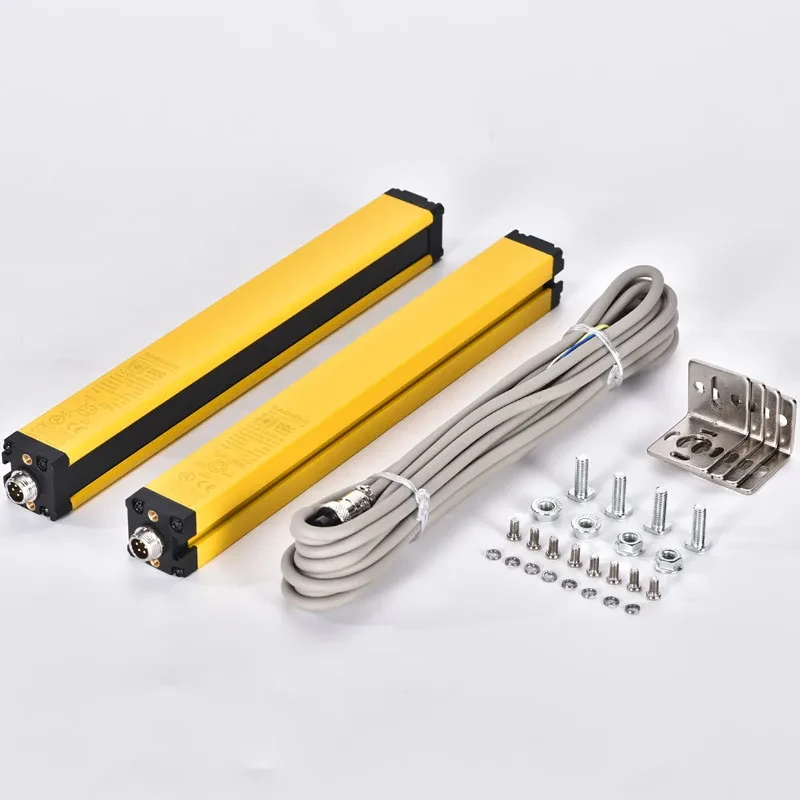
Example of separate transmitter and receiver heads from the DQC series.
