

Introduction
Trying to lift an oddly shaped or oversized load with a single sling connection often ends badly, whether that means the load tips, slides, or simply won’t hang level. Lifting beams exist specifically to solve that problem, giving riggers a way to distribute weight across multiple points and keep a load stable and level throughout the lift. Understanding how these devices actually work explains why they’ve become such a standard part of overhead lifting on so many job sites.
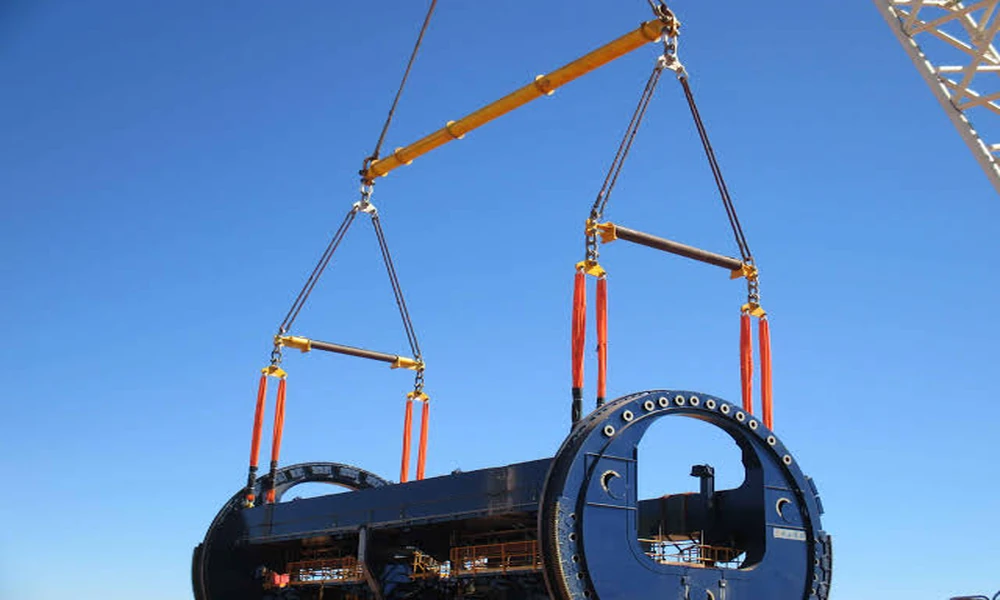
Incorporating specialized lifting beams into your rigging setup provides an immediate increase in control and load balance during complex overhead operations. Unlike standard spreader bars that primarily handle compressive forces with steep top-rigging angles, these rigid beams feature a heavy-duty single top bail that hooks straight to the crane hoist, making them ideal for rigid loads requiring multi-point support. This rigid design eliminates bending moments across the load itself while minimizing side-pull forces, ensuring smooth and controlled movements across demanding work environments.
Multiple Pick Points Solve a Real Structural Problem
A single attachment point works fine for a compact, evenly balanced load, but longer or irregularly shaped loads need more than one connection to stay level. Lifting beams provide a single top attachment to the crane hook paired with two or more evenly spaced pick points underneath, spreading the lift forces across the load rather than concentrating all the stress in one spot.
Keeping Slings Vertical Protects Both the Load and the Rigging
Without a beam, a wide or long load often forces slings into an angled position, which can let the load slip out of the rigging or cause the slings to slide during the lift. By spreading connection points apart, a lifting beam keeps slings closer to a vertical, perpendicular angle, reducing the risk of the load shifting and cutting down on wear to the rigging itself.
A Design Built for Tight Headroom
Because a lifting beam connects directly to the crane hook without needing additional top rigging above it, it takes up considerably less vertical space than alternatives that require extra hardware overhead. That makes lifting beams especially useful in warehouses, sheds, and other confined spaces where every inch of headroom actually matters to completing the lift safely.
Handling Unbalanced and Asymmetrical Loads
Adjustable lifting beams with multiple hook positions can be configured to accommodate loads whose center of gravity isn’t perfectly centered, a common challenge with irregular or custom equipment. Being able to reposition pick points to match a load’s actual balance point, rather than forcing the load to fit a fixed configuration, is a big part of what makes lifting beams so adaptable across different job types.
Built to Standards That Back Up Their Stability
Properly manufactured lifting beams are designed in accordance with recognized engineering standards and are proof tested to well beyond their rated capacity before ever being put into service. That level of testing and certification is part of what gives riggers real confidence in a beam’s stability, not just in how it’s engineered on paper, but in how it actually performs under the loads it’s rated to carry.
Conclusion
Lifting beams solve a specific structural problem, giving oddly shaped, long, or unbalanced loads the multiple points of support they need to stay level and stable throughout a lift. That combination of distributed weight, reduced sling angle risk, and a compact, low-headroom design is exactly what makes them such a reliable choice across warehouses, construction sites, and industrial facilities. For any lift where a single connection point simply won’t cut it, a properly matched lifting beam remains one of the most dependable tools for getting the job done safely.
